Showing posts with label etymology. Show all posts

Tuesday, September 22, 2009

Everything I need to know I learned from Wikipedia

There's a lot going on. Lots of work, lots of running around, lots of biking in the rain, lots of fucking rain today. Not a whole lot of money, which so far has amounted to a metric shitton of stress.

***

Finally finished a couple books.

First is Edward Abbey's The Monkey Wrench Gang, which is a truly excellent novel, especially for the ecologically-minded reader who isn't particularly interested in the crunchy vegan PETA/Sierra Club-minded fluffy shit. (speaking of PETA, check out how unfortunate their blog name is!) These people want their wilderness back, so they're going to blow up the fucking dam. And then get drunk. And then destroy some more shit. It's awesome. While it may buy into the quasi-misogynistic stereotypical male gender roles of eatin' meat and slammin' beers and shootin' guns, I actually found it pretty refreshing and invigorating, given the tree-hugginess at the core of the book. Definitely required reading.

The other book I've read recently was Joseph O'Neill's Netherland. It was mostly about cricket and New Yorkers who were scared shitless after 9/11. But really, it was mostly about cricket, which drove me crazy because a) cricket is a totally incomprehensible game to begin with, and b) what the fuck is with otherwise great writers and sports? It drives me insane. Don DeLillo won't shut up about baseball, Nick Hornby, soccer, David Foster Wallace, tennis. Et cetera ad infinitem.

Anyway, Netherland was alright, but I don't know what James Wood was smoking when he called it a "postcolonial re-writing of The Great Gatsby", because seriously, it was all about cricket. Yeah, yeah, it's a metaphor or whatever, but still. It's cricket, and the only good thing that ever came out of cricket was one of the best/most ridiculous Bollywood flicks ever made.

Next up: One Hundred Years of Solitude by Gabriel Garcia Marquez and Peter Mayle's A Year in Provence. [Edit: Years? Huh. Just noticed that.]

***

But, of course, despite all business there's always time to dick around on Wikipedia (and write inarticulate book reviews nobody will read). Here's the best thing I've found this evening: http://en.wikipedia.org/wiki/Diner_lingo.

Check the ice.

Friday, September 4, 2009

An't got no liquidity, guess that prevents pinguidity. . .

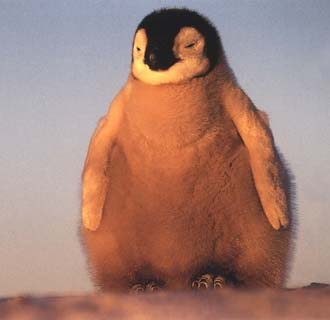
(952): going out? Paunchy penguins?

This is a text I just received from my friend Mike. It's a Thursday night, but. . .maybe you should be sitting down for this: I'm actually at home. And I plan on staying right here until my first class tomorrow. No money, so no Paunchy Penguins, nor Chubby Chipmunks, nor Beefy Belugas for me tonight.

It all started (as too many things do) with a drink special.


As all good Madisonians know, The Vintage, a decent downtown joint with a massive patio (and surprisingly good pancakes and a Bloody Mary bar, if you're in the mood for that kind of thing on a Sunday afternoon), has a special on Monday nights where any Wisconsin beer is $1 until midnight, which includes many local favorites, including Fat Squirrel, a nutty brown ale from New Glarus.

Now, New Glarus beers also have wacky names, like Dancing Man, or Totally Naked, or the ubiquitous Spotted Cow. They do this because they are a Local Brewery, which is apparently synonymous with Very Quirky. But one day, while I was facing the beer and wine section at Trader Joe's, which is a store that tries very hard to be Very Quirky because they want to seem like a Local Grocery Store (Freal. The emphasis on Tiki-Themed Maniacally Friendly Employee Culture is specifically geared toward making you think that it's like the Willy Street Co-op. Which it isn't), when I came across something called Fat Weasel.


So I'm all like, Seriously? How many Adipose Animal-themed beers are out there?

***

And so it began. Portly Possum. Obese Ostritch. Glandular Guinea Pig. Stout Stoat. Flabby Fox. Et cetera et cetera ad infinitem, literally. Except that tonight I was tired and checked a thesaurus for more fat words. Unfortunately, there was only one that hadn't yet been used: the word pinguid.
pinguid |ˌpɪŋgw1d|
adjective
formal
of the nature of or resembling fat; oily or greasy.

DERIVATIVES
pinguidity
noun

ORIGIN mid 17th cent.: from Latin pinguis ‘fat’ + -id
Which, until you read the definition, is kind of the most adorable fat-word I've ever heard. If I ever make a beer (and given the current trendiness of homebrew coupled with the desire to redeem myself after that wretched absinthe I made last year, it could happen), I'm calling it Pinguid. And on the label would be something like this:

Which then makes me think of those awful quizzes they put in pamphlets in the student clinic, or sometimes around the gym that ask How many cheeseburgers did you drink last night? (answer: you don't want to know).

***

And this confuses me. Does alcohol really make you fat? Do I simply exist in this magical 22-year-old world where I actually am invincible and I can drink as many cheeseburgers as I want and still stay the fairly slender woman I am? Because I always thought the mythical "beer belly" came from those three Pizza di Roma slices you thought you needed between the Plaza and bed. Or the high-calorie mixers people put in their cocktails, illustrated quite graphically in this sick New York public health campaign. Or the fact that post-bender breakfasts tend to resemble something like this (thank you, thisiswhyyourefat.com).

Oh, and just so you know, I can has fifty-four (54!!!) cheezburgers in one month. Holy shit.

Monday, February 16, 2009

je suis l'avocat du diable


biggest damn avocado I've ever seen.


avocado


For some time, I labored under the delusion that this was Spanish for "lawyer." Made sense, being so close to advocate. But I wondered, often aloud and in company: What is it about the nice soft yellow-green chunks in my salad that suggests an attorney?

Then someone took me aside and informed me that the Spanish for "lawyer" is abogado.

Okay, okay, but hold on.

The first known word for the fruit was ahuacatl, which in the Aztec language, Nahuatl, also means "testicle." I suppose an avocado is shaped sort of like a testicle. (WIII [Webster's Third New International Dictionary, Unabridged] says the Aztecs used the avocado as an aphrodisiac, I don't know.) The Spanish rendered ahuacatl as aguacate. It's from that huac/guac that we get guacamole.

So what about the legal aspect? According to AHD [American Heritage Dictionary of the English Language], some Spanish speakers rejected aguacate in favor of the familiar avocado, which was indeed at that time Spanish for "lawyer." Why was it changed to abogado? Maybe because lawyers didn't want to be associated with those nice soft chunks.

If Spaniards couldn't be bothered to pronounce ahuacatl, you know English speakers couldn't-- they picked up the lawyer-resembling version. So did the French: avocat du diable means "devil's advocate," but it could also mean "devil's avocado." And I'll bet a lot of Francophones have wondered, down through the years, what these morceaux verts, gentils et mous have to do with les hommes de loi.

Another French word for the fruit is poire d'alligator. In English, but roughly the same token, the fruit is sometimes called "alligator pear." AHD says this derives from the notion that avocado trees grow in places infested with alligators. Doesn't it seem more likely that the leathery green rind of the avocado fruit makes it look like a pear-- or, all right, a testicle-- in alligator clothing?

I don't suppose I have to tell you that alligator comes from the Spanish el lagarto, the lizard. In English, it was alligarta or alligarto-- ending in a vowel-- until the First Folio version of Romeo and Juliet, where it swims into our ken spelled Alligater. (Romeo tells Juliet he knows where he can get some poison: from an apothecary whose shop is decorated with a stuffed alligator "and other skins of ill-shaped fishes.") This was like potato becoming tater; hollow, holler; and fellow, feller. But I guess it looked literary, at least once -er became -or, because even the French picked it up.

However (according to Harrap's Slang Dictionary, English-French/French-English), the French do not toss around "See you later, alligator" in literal translation. It's "À tout à l'heure, voltigeur." (As of 1984.) A voltigeur is an acrobat.


from Alphabet Juice: The Energies, Gists, and Spirits of Letters, Words, and Combinations Thereof; Their Roots, Bones, Innards, Piths, Pips, and Secret Parts, Tinctures, Tonics, and Essences; With Examples of Their Usage Foul and Savory (pp. 30-31) by Roy Blount Jr.